
Robert Taylor and the Founding of Corona
Imagine it’s the mid-1880s, and you’re married, with a young daughter, living in
Northwest Indiana.
You are established and making a respectable living as a merchant. Dreams of
following the “Land Rush” out west to California are pulling at you. Promoters are
calling it the land of opportunity, with fertile ground and unlimited economic
opportunities. You load up your family, all your belongings, and move well over 2000
miles for an uncertain new life. Can you imagine making such a bold, adventurous
decision today, let alone in those days?
In 1886, Robert B. Taylor did just that. He packed up his family and boarded a
westbound train. He arrived in Anaheim and was introduced to Adolph Rimpau, who
took him to a bare plain to the east. Fifty years later, in a letter to the Corona Daily
Independent, Taylor wrote that “On going to visit the land, I was captivated by the
beauty of the site, the rich soil, and the prospects of obtaining water for the tract from
the Temescal Valley, a few miles southward.”
He was so impressed by the area that he quickly secured options to purchase more than
11,000 acres. Mr. Taylor conveyed his vision of a new town to investors Adolph
Rimpau, George L. Joy, A.S. Garretson, and Samuel Merrill, and the five men invested
over $110.000 (equivalent to over $4 million today) to purchase land and secure water
rights. The South Riverside Land & Water Company was formed to develop the new
town of South Riverside. The name was chosen to capitalize on the City of Riverside,
founded in 1870, widely considered the birthplace of California’s navel orange
industry.
The vision of a new Citrus town coincided with the expansion of the transcontinental
railroad through the Cajon Pass, linking greater Los Angeles with the rest of the
country. The introduction of refrigerator cars on the Southern Pacific Railroad enabled
the transport of perishable citrus vast distances for the first time.
In 1886, the U.S. experienced a period of massive growth driven by industrialization,
urbanization, and immigration. California was quickly moving past its early frontier
days. Late in the year, President Grover Cleveland presided over the dedication of the
Statue of Liberty, a symbol of freedom, hope, and America’s welcoming spirit.
Although it’s impossible to know what Robert Taylor would think of Corona today, I
believe that he would be pleased with the progress of his venture. I, for one, am
grateful to him and his family for following the “California Dream”.
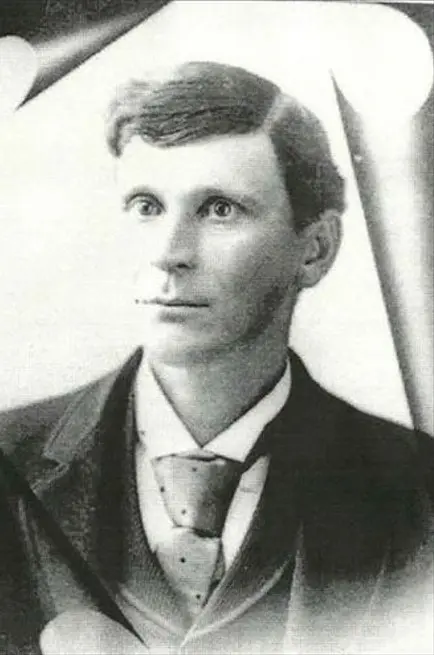
Robert B Taylor 1849-1940